Feminist Muses by Dr. R Lakshmi Priya
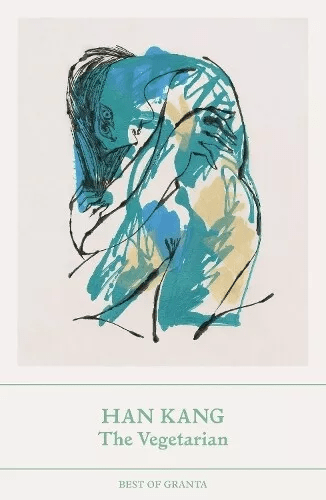
Few Years ago when I read Vegetarian by Han Kang I felt a personal connection with it. Here was a writer who equated violence against women in parallel to violence on animals. She drew similarities through her subtlety. No animal is asked permission before harming it, it works out for women as well.
Han Kang again came to my consciousness with her The White Book. I can easily say that, it was the toughest book I have read, yet the book wrung my soul in such a tranquil way.
I feel that madness can be caused only by tranquility. The book, the colour, the texture, the font everything was serene. Yet the book overpowered me.
Then two years back, vegetarian came to my consciousness again. This time through a publication house that I have never heard of. This publication did not even have a proper website then, it shocked me to see someone read, then pursue and buy rights for it. That was not it. It was the title of the book that stunned me. In Tamil, the word used generally to represent Vegetarianism is சைவம். This is the common word that we hear around in restaurants, or even generally at households.
As a vegetarian whole my life, my perception of vegetarianism was singular and simple. I simply thought that I would never eat meat. I should rather say, that it was passed on by family and traditions.
At the same time, I am an artist, I travel a lot, I have friends from all walks of life and I know not to disrespect food. Hence when someone offers me, or sometimes forces me to share meal with them.
I have learnt to decline politely without hurting anyone’s feelings.
I have come across questions, “So why don’t you try once?” My answer would simply be a smile.
If someone convinces me, I would ask them if they will eat every kind of animal meat. No everyone has a choice and preference. “And I would say, being a vegetarian is my choice.”
Slowly, my vegetarianism ceased being a simple tradition that was passed on by family. And it became a choice.
But the moment I set foot inside Tamil Nadu, my knowledge and readings became vast and I realised that caste and class dictate what you eat.
This whole concept of choice and preference shows that I belong to a privileged class where I have choice.
I had an opportunity to see Selvaraghavan’s ‘Ayirathil Oruvan’ with a meat eating friend of mine. I asked her why would they show a revolting and graphic imagery of someone wanting to eat rat meat. She was offended. She shared that during colonisation when there was man made shortage of food. The farmers who grew rice had no choice but to catch the field mouse and eat the same.
Life is a learning curve. And the learning is perpetual. Categorising vegetarianism in Tamil as merely, a translation is heresy.
The translator, (whom I had the privilege of talking to him yesterday) has not merely translated the words and contexts. But he has made sure that he has left his own values and belief systems inside his translation.
I think, that is why the title is not simply ‘சைவம்’ the most obvious word, yet associated with religion, caste and class. Instead he had used the word, ‘மரக்கறி’ a word that I don’t remember hearing at all. Then he clarified, that Tamils in Malaysia, Singapore and Srilanka use this word in their common parlance.
I was taken aback. I remembered searching and eating ‘மரக்கறி’ in Malaysia. I also remembered that the small eatery served me the food that was kept aside for the owner’s daughter to eat.
If you haven’t read Han Kang yet, if you can read Tamil, then the starting point would be ‘மரக்கறி’
A poignant tale of feminism, choice and most importantly being one with nature and then becoming the nature.
I have always fallen for narratives of madness. Particularly mad woman tales and I remember a situation in the novel, where she would go and stand by a tree when it is pouring. It reminded me of my own madness and exploration of nature. For some reason it also brought back to me Surfacing of Margaret Atwood!
Do read and share your views folks!
 Learn Curve for Girls
Leave a comment