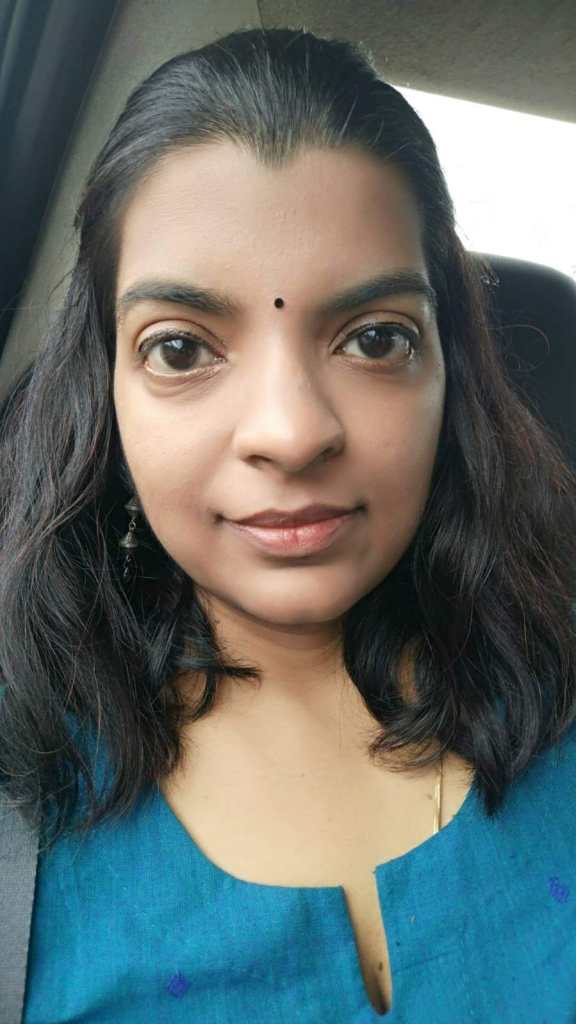
You had a vision for India as teenager and that is what motivated you to become a journalist. Could you talk about your experiences of meeting people with a vision for India?
I have a worked on a series of profiles of scientists who won awards. Some have done very interesting projects. Some of them have done projects you don’t even understand. When you present a story, it should be understood by a 12-year-old too. TV is a very visual medium. It’s difficult to explain physics and maths developments in a way that they are easy to understand. I remember interviewing a social scientist who did work in rural Karnataka. We spoke to people whose lives were dedicated to serving India. I interviewed a doctor who worked in the tribal belt. He spoke of his challenges and recollected instances with tribal women, who would refuse to believe in the medical system. They would mix leaves from trees and say that this would cure them. They would avoid treatment. But he also spoke about how in time understood that tribal wisdom needed to integrated with medical wisdom. Lot of people want to change the world. You would think it is so difficult to change the world. Call it fate – but I have seen a lot of people who do come your way because they have seen and appreciated some work you have done. All this fills you with hope.
Could you talk about the role of journalism in bringing about change in society?
I have covered a lot of social issues and social problems. In 2020, we discovered there were a large number of child brides in rural Karnataka. In 2018, through a child helpline we uncovered a child rape case where the perpetrator was a relative. The girl was 13 and had a child. She gave birth to the child and we got a lot of help from the Anganwadi. She was really scared. The parents were waiting for the perpetuator to be released. They wanted their daughter to be married to him as they could see no other way. In 2019, we went through a local NGO and found 17-18 year olds who had children as old as one year. To access the health system to which they needed access – local workers got them to change their age. They were able to access the health system this way, which was a priority. Yes, they were in a child marriage, but now the priority was to take care of their young children and also their health. None of them was confident. It was difficult for them to get access to healthcare. When you are in a system you work within the system. No one will fend for the mother and child. We have to address such issues with awareness. We need to be more aware – that is the only way to understand in such situations. There are ethical issues we come across.
You spoke about awareness, could you elaborate on this?
There was a science event for children I was covering – a rocket making competition. They were in the fields. Every rocket went 1 foot one alone went 10 feet high. I wanted to interview the boy who made it. He was very shy and didn’t want to talk in front of the camera. He asked if he will have to speak in English. He said in Kannada, I can’t speak very well in English. He told me he had just come from a village and had started attending the city school. He was in the 7th grade, 12 years old. “I can’t talk Akka,” he told me. I told him that many scientists in ISRO studied in Tamil, Telugu and Kannada medium. He called me three days after that and said, “Thank you Akka.”
What is your understanding of awareness?
Awareness is very important. People know what lens they are coming from. It is important to be kind and sympathetic. Empathy matters. People tend to become judgemental very often. Let’s accept people as they are. It’s important not to judge. Empathy really matters.
 Learn Curve for Girls
Leave a comment